shewhostaples: Actress Mary Anne Keeley in a breeches role (breeches)
two log cabins with snow on the roofs in a wintery forest the text snowflake challenge january 1 - 31 in white cursive text

Create a promo and/or rec list for someone new to a fandom

Well, I was enthusing about The Count of Monte Cristo the other day, so I shall expand on that a bit. (Also see 2019 post here.

It's a French novel (original title: Le Comte de Monte Cristo) by Alexandre Dumas (père), first published in serial form from 1844-46 and then as a complete novel in 1846. (There were two Alexandre Dumas, father and son. The father is most famous for The Three Musketeers and the son is most famous for The Lady of the Camellias.)

The first part of the book stars too-good-to-be-true sailor Edmond Dantès, who is framed for a crime of which he is, obviously, innocent, and imprisoned in an island prison just outside Marseille. There he encounters the Abbé Faria, who knows where to find some hidden treasure on another island, tiny Monte Cristo, if only he could get free... Well, he can't, but Edmond is younger and stronger and has a much better chance.

The rest of the book follows the consequences - for Edmond (who has restyled himself as Count of Monte Cristo), and for the three men who stitched him up, and for their nearest and dearest. (Edmond has been in prison for a while, and they've all done rather well for themselves - implausibly so, in some cases.) They take a while to work themselves out, but they're very satisfying even as they're somewhat horrifying. It's revenge with an unlimited budget, and then having to come to terms with what that does to a person. (If absolute power corrupts absolutely, then unlimited revenge... erm. Anyway.)

I love the melodrama. I love the Gothic vibe. I love the canon lesbians (Eugénie, the daughter of one of the three villains and an impoverished friend who sings opera with her) who get a happy ending under their own author's nose. I love the background detail, Parisian society, the faint odour of decadence.

Warnings: the dodgy opinions you'd expect for 1846. Alexandre Dumas was in fact Black, but this doesn't stop him going unfortunately Orientalist in places.

Also note that it's very long - about 1200 pages in my edition. This is a plus for me: I read it in difficult times and by the time I get to the end something will have changed somewhere. It's worth being careful about the translation, as some of the older ones are also bowdlerisations and lose vital Eugénie bits. Which is a travesty.
mrissa: (Default)
 

Review copy provided by the publisher. Also the author is a dear friend, and I read an earlier draft.

I'm so glad we're finally closing in on the day when the rest of you can talk about this delightful weird book with me. If you've been reading John's short stories for all these years, rest assured that this book has the same heart and the same absolutely fresh take on the world and its structures. If you haven't, what a treat you have ahead of you! Go forth and read!

This book, though. Okay. Ellie looks after the structure of the universe far more than most of us with physics training. She regularly visits the skunkworks, an extra-universe space that allows for tweaking and re-coding the laws of this and other universes. John puts the physics in metaphysics here--there's a whole community of people dedicated to this work in a way that's a lot more like a branch of engineering, architecture, or software design.

Unfortunately, most of that community has been poisoned against her by her self-righteous, violent, and gaslighting-prone sister Chris. And when their mother dies, Ellie is left scrambling against changes in the laws of physics themselves. She's not sure who she can trust. Thank goodness for her hulking cousin Daniel, the most food-focused metaphysician you'll ever meet.

So yeah, you'll be intrigued, you'll be hooked, but you will also be hungry. Maybe it's that John and I have similar taste in food (the bao! the brussels sprouts! WHAT DID YOU DO TO THAT EGG TART, CHU), but I was on the edge of my seat mostly to find out how Ellie and Daniel would beat Chris's machinations but also a tiny bit to see what food item Daniel would come up with next. I always knew that cooking was crucial to the maintenance of space-time. Soon the rest of you can see why. Highly recommended.

mount_oregano: Let me see (judgemental)
map of islands in Lake Michigan with a red X

I know of two supposed sunken treasures of gold in Wisconsin, one in Lake Michigan and one in Lake Mendota, both dating back to the Civil War. I’ve researched the one in Lake Michigan and even have the treasure map which locates the gold near Poverty Island Shoal at the tip of Door Peninsula, but I haven’t decided to go hunt for it. I don’t think these treasures exist.

What interests me is why these stories stay alive. Lies are common as leaves in a forest, so why keep certain ones?

First, there’s a simple wish for sudden wealth, the motive force behind lotteries.

Second, legends often say that treasures, buried or sunken, are guarded by leprechauns, mermaids, or at least a curse — by beings alien and magic to our existence. It’s a wish for a livelier universe. In the same way, some of us hope for life on Mars or Andromeda, which would also be a real treasure.

Third, it’s a wish to preserve and honor the past by keeping stories alive. Ghosts work the same way. I met a woman whose neighbors told her the troubled presence she noticed on the stairway of the house she’d just bought was of a teenager who had committed suicide some 50 years earlier because he was gay. She hung a gay pride poster in the stairway to soothe him, and it seemed to work.

Most importantly, treasure is real. Sometimes — at Troy and in the Caribbean — gold is found, and then our wishes are confirmed. I can see Mars at night, and I might be watching Martians. If there are ghosts, I have visited haunted houses. When I lived in Milwaukee, someone else in that city named Susan Burke (not me) won the Supercash lottery. Riches await, if we keep searching.

X marks the spot.

shewhostaples: A cheerful bird (cheerful)
Make an appreciation post to those who enhance your fandom life. Appreciate them in bullet points, prose, poetry, a moodboard, a song... whatever moves you!

Dear friends (mostly, but not all, on Dreamwidth) who...

... are really enjoying that ice hockey series
... are really enjoying playing ice hockey themselves
... are really looking forward to the Winter Olympics
... are reading that book that everyone is reading
... are reading that book that everyone read three years ago
... are reading books that nobody's read for a hundred years
... are reading things I wrote when I could string more than ten minutes together at a time
... are knee-deep in an obscure spin-off of something I saw once
... are singing or playing
... are listening to other people sing or play
... are going out and eating delicious things
... are cooking delicious things for other people to eat
... are going to interesting places and seeing interesting wildlife and sharing pictures
... are doing small things (or big things) in pursuit of a better world

... I am really enjoying reading about your enjoyment and activity, though I never manage to comment as often as I'd like. Thank you for keeping me in touch with the fandom world!


TALK ABOUT A COMMUNITY SPACE YOU LIKE. It doesn’t need to be your favorite, or the one where you spend the most time (although it certainly can be). Maybe it’s even one that you’ve barely visited. But talk about that space and how it helps support fannish community.

Having talked mostly about Dreamwidth above, I'm going to go super literal here and talk about the bandstand in my home town. It's set at the centre of a park next the river, and every summer Sunday afternoon a different brass band from one of the surrounding towns and villages turns up to give a free concert. Programme-wise, you always know more or less what kind of thing you're going to get: a march or two, some film music, an arrangement of some classic rock, and so on, but since it's never advertised in advance you don't know the specifics. There's always a mixed audience: people who know it's happening and have turned up deliberately; friends of the band; people who were just wandering past and stop to listen; kids playing on the slides. Some people stop for a few minutes and then move on; some stay for the whole thing.

I love the energy of live music, and it's so good to have something that's so very relaxed, so very - literally - open.
shewhostaples: (Default)
two log cabins with snow on the roofs in a wintery forest the text snowflake challenge january 1 - 31 in white cursive text

Grant someone's wish from Challenge #5.

I answered a couple of requests for recommendations, and am copying my answers here for reference.

1. for someone who wanted to hear from people forty and up about shopping for clothes:

I hit forty last year, and what I've done is to keep on experimenting until I find something that works - whether that's a shape, a colour, a manufacturer - and then keep on experimenting with that. What that looks like depends very much on circumstances - at the moment I have quite a lot of unscheduled time and my small town has a lot of charity shops, so I'm mostly buying things second-hand and donating them back if they don't end up working. But when I was working full-time I did a lot more internet shopping. (Svaha and Joanie were what worked for me then, for what it's worth.)

I had a most illuminating conversation recently with a group of friends, most of whom like Seasalt. I said that Seasalt ought to work for me but never quite does, but that Fat Face is pretty reliable. Interestingly, most of the Seasalt fans said that Fat Face never quite works for them. I take from this the lesson that even makes that appear very similar at first glance will be more or less suited to different groups of people, so it's worth keeping on looking.

I also like the Who Wears Who blog for thoughtful prompts on style and experimentation with same.


2. replying to someone who wanted to talk about femslash

Femslash! Here are three of my favourite books with canon femslash ships:

- my oldest - The Count of Monte Cristo, a rambling but enjoyable French doorstopper tale of revenge, appeared from 1844 to 1846 and has canon femslash. And no bury your gays! (Obvious warning: it is, of course, very much Of Its Time.)
- my newest - I've just finished The Priory of the Orange Tree. Will it be one of my favourites of all time? Probably not, but it was a lot of fun - an ambitious fantasy novel that attempts to put a valiant number of belief systems and all the dragon lore on the page. And yes, canon femslash.
- the one that feels like it was written just for me - the Alpennia series by Heather Rose Jones. It includes many of my favourite tropes (fictional European country, swashbuckling, complicated power dynamics) and weaves religious practice into the way the magic works in a way that I've rarely seen done so effectively. And, for a third time, canon femslash.

Fight fascism

Jan. 24th, 2026 06:35 pm[personal profile] athenais
athenais: (camera lens)
Said it on Facebook. Said it on Threads. Saying it here.

If you think I post sunshine and concert tickets because I am ignoring the absolute fascism, illegal arrests, detaining and jailing of citizens, the lawless killings without cause, or the pressure on Americans to accept this reign of terror: no. I am not. They will widen their focus as soon as that $10B bill funding ICE passes the Senate, which seems likely to me right now. I need to be ready for it. Am I? Not sure. This is my first dictatorship. I fear we will all have to learn on the fly. Show up. Say no. Protect each other.
mount_oregano: novel cover art (Semiosis)

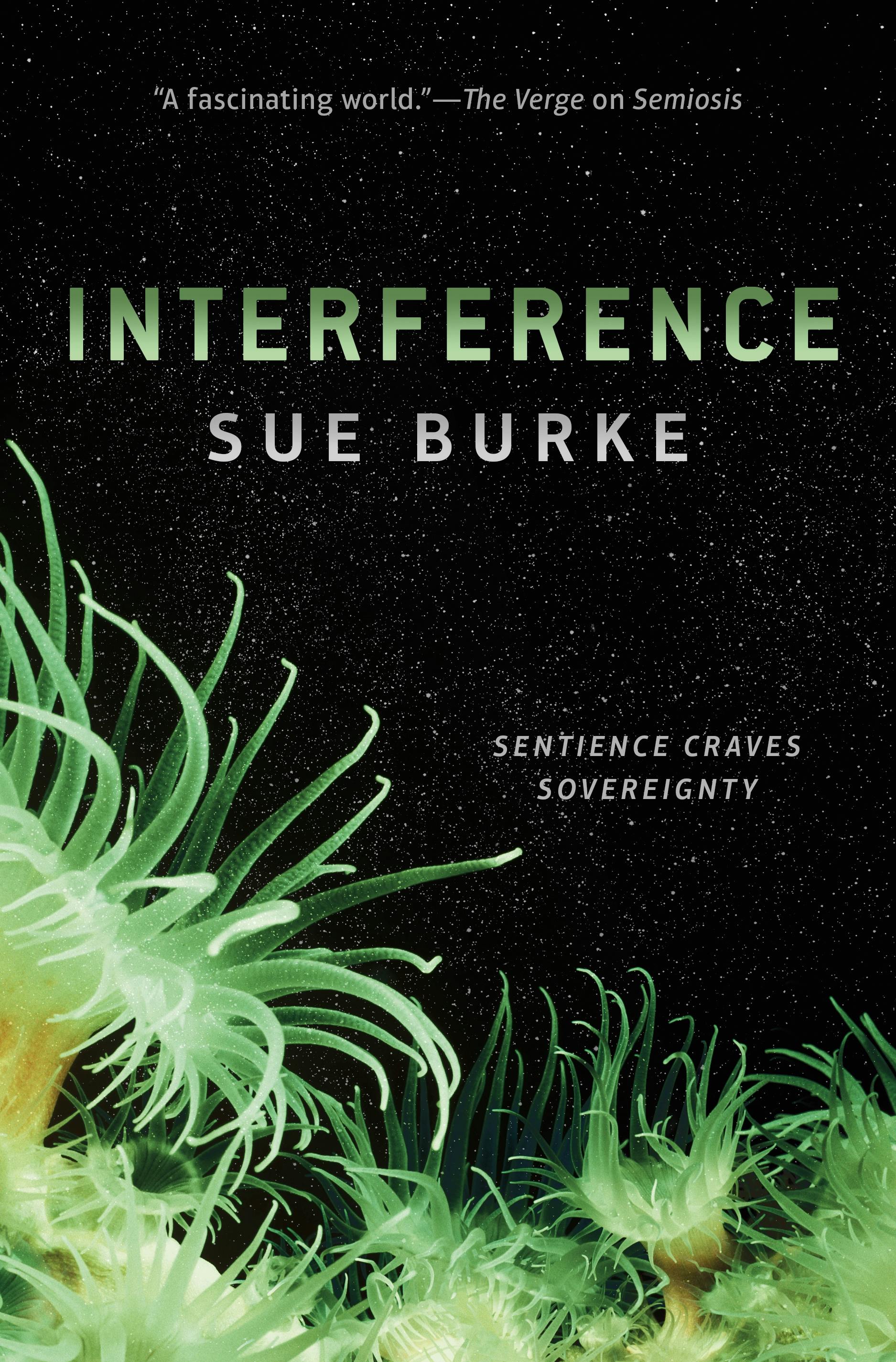
For Shawn Thompson, curiosity is a way to live in a deeper and more fulfilling way. That’s what he explores in his podcasts. He wondered how I found a way to write from the point of view of a plant in the novel Semiosis, so we had a chat about the craft of imagination in writing, curiosity, first contact, and alien intelligence.

You can watch us on YouTube here:

Episode 1: https://youtu.be/k-PsnhuqC3U

Episode 2: https://youtu.be/rLsPkECqac4

Episode 3: https://youtu.be/wwtgan1j8jw

Curious podcast channel: https://www.youtube.com/@theoldcuriositypodcast

shewhostaples: image of a crown with text 'heaven doesn't always make the right men kings' (zenda)
two log cabins with snow on the roofs in a wintery forest the text snowflake challenge january 1 - 31 in white cursive text

Big Mood (Board)

CHOOSE SOMETHING YOU LOVE AND CREATE A MINI MOOD COLLECTION OF THREE (or more) ITEMS THAT EVOKE YOUR FEELINGS ABOUT IT. You don’t have to limit yourself to visual media, or collect the items into a special format like a square (though you can if you’d like).


I've never done a digital moodboard (have done physical collages, back in the day) and this sounded fun, if a little challenging to manage with limited laptop time. As I've been burbling about The Prisoner of Zenda quite a bit recently, I thought I'd stick with that. All the images came from Wikimedia Commons.

I can never make DW images play nicely, so I'm just sticking this under a cut and hoping for the best. I hope it doesn't come out too huge!

Read more... )
mount_oregano: portrait by Badassity (Default)
Photo of a bootprint in the dust on the Moon

Once again, you curse the gods of literature: Your “short story” turned out to be the first chapter of a novel, and you really wanted a short story. How do you keep things short? Try to limit the number of important characters to two or three. Use one point of view. Keep the conflict simple, the way that postage stamp artwork is memorable but simple. Compress the time frame. Aim for a single effect. Include only the most essential information. If you need a short story idea, here are a few.

• This is a fantasy story in which a gem broker becomes obsessed over a new kind of stone that appears at a roadside market.

• This is young adult story in which a panic-stricken alien learns self-defense from a dog.

• This is a competence p0rn story about an incorrigible lunar pioneer who endangers the settlement by sloppy habits that introduce lunar dust, which has damaging and dangerous sharp edges, into living and working quarters.

shewhostaples: image of a crown with text 'heaven doesn't always make the right men kings' (king)
Snowflake Challenge: A flatlay of a snowflake shaped shortbread cake, a mug with coffee, and a string of holiday lights on top of a rustic napkin.


Talk about your favourite tropes in media or transformative works. (Feel free to substitute in theme/motif/cliche if "trope" doesn't resonate with you.)

Where to start? Let's start with swashbuckling. That's a nice easy one. Really, I think my fannish id was formed by The Prisoner of Zenda at an early age (I am still very fond of The Prisoner of Zenda).

See also: Ruritania. I love a good fictional society, and the deeper we go into the government departments and the transport infrastructure, the happier I am.

And love and duty. I don't necessarily mind which triumphs, so long as both are taken seriously. I also love it when one of the arts - or sports, or whatever - is the third party in a relationship, particularly when the partners are both very enthusiastic about that. Not to mention the creator. (This was why I enjoyed Yuri!!! on Ice so much: it was very much about the skating.)

I like relationships between women, romantic or otherwise. And friendships between men and women where it's never going to become romantic.

And then I always enjoy a good description:
Food. Chalet School breakfasts. The Marseille chapter in Madam Will You Talk.
Clothes. Annoyingly, I can't think of a good example at this moment. Probably Eva Ibbotson.
Landscape. A John Buchan evening. Can't beat an apple-green twilight.

Finally, something that I write more often than I read is the situation where you will never be able either to clean up Dodge or to get out of Dodge, you have to live in Dodge, but nevertheless you can find a way to carve out a happy and/or meaningful life there. And maybe you find you've made it slightly less grubby.
shewhostaples: Kif says, 'I'm creating!' (creating)
Snowflake Challenge: A flatlay of a snowflake shaped shortbread cake, a mug with coffee, and a string of holiday lights on top of a rustic napkin.


Talk about your creative process.

Five years ago I'd have talked about volcanic islands rising out of the sea, and building causeways between them. A good premise or prompt would spark a snappy exchange between two characters, or a vivid little snapshot of background, or a moment of insight. I'd write them down as soon as I could.

Then I'd build on them, adding the line that followed on naturally, the reply that the other character would have to make, setting up the scene so that this moment could happen. And then I'd work out how they all related to each other, what order they came in. I'd consider what needed to have happened by the end of the story in order to make it satisfying, and I'd add a bit here and a bit there until my lonely archipelago had a fully functional infrastructure.

I am still trying to do this, but it's not working as well as it used to. A toddler who just doesn't go to sleep, a commute (once my best writing time) that's down to one day a week, and a dying laptop have all made writing hard, and frankly I'm just too tired a lot of the time.

But I am exploring other creative realms, and the one that's currently interesting me most - knitting - is about as different as you can get. You have to do that in the right order.

At the moment I'm trying to design my first pattern: a slipover. It's going to have to be a slipover because I only have five balls of this yarn. I bought it in a charity shop and the Internet has nothing to say about it. I am having to plan: to measure, to practise, to calculate. I can't just make it up as I go along. It is an alien process to me, but, rather to my surprise, I'm enjoying it. The secret is, I think, being just good enough to be able to do things that make all that interesting rather than tedious. By which I mean, cables. I really like cables. I'm even enjoying the tension square.
shewhostaples: (Default)
Trying to get back on the bus with this one...

two log cabins with snow on the roofs in a wintery forest the text snowflake challenge january 1 - 31 in white cursive text

LIST THREE (or more) THINGS YOU LIKE ABOUT YOURSELF. They don’t have to be your favorite things, just things that you think are good. Feel free to expand as much or as little as you want.

1. I am - not always, but often - capable of finding ordinary things utterly delightful. Like the Wendy Cope poem about the orange. I am not in that state at the moment, but it is lovely when it happens.

2. On the small scale, I think I am slightly luckier than average. For example: my hair went grey in my early thirties, but that happened to be the couple of years in which many people my age were dyeing their hair grey. We moved house the week before the first Covid lockdown, when it could have been the week after. I win raffles, and the occasional twenty-five quid on the Premium Bonds. (Or maybe I'm no luckier than anyone else, but - see point one - appreciate my luck more?)

3. I really like making things. I like that about myself.

4. Fashion aside, I do like the way my hair looks.

Books read, early January

Jan. 16th, 2026 04:12 pm[personal profile] mrissa
mrissa: (Default)
 

P.F. Chisholm, A Suspicion of Silver. Ninth in its mystery series, set late in the reign of Elizabeth I/in the middle of when James I and VI was still just James VI. I don't recommend starting it here, because there was a moment when I wailed, "no, not [name]!" when you won't have a very strong sense of that character from just this book. Pretty satisfying for where it is in its series, though, still enjoying. Especially as they have returned to the north, which I like much better.

Joan Coggin, Who Killed the Curate?. A light British mid-century mystery, first in its series and I'm looking forward to reading more. If you were asked to predict what a book published in 1944 with this title would be like, you would have this book absolutely bang on the nose, so if you read that title and went "ooh fun," go get it, and if you read that title and thought "oh gawd not another of those," you're not wrong either. I am very much in the "ooh fun" camp.

Matt Collins with Roo Lewis, Forest: A Journey Through Wild and Magnificent Landscapes. Photos and essays about forests, not entirely aided by its printer printing it a little toward the sepia throughout. Still a relaxing book if you are a Nice Books About Nice Trees fan, which I am.

John Darnielle, This Year: A Book of Days (365 Songs Annotated). When I first saw John Darnielle/The Mountain Goats live, I recognized him. I don't mean that I knew him before, I mean that I taught a lot of people like him physics labs once upon a time: people who had seen a lot of shit and now would like to learn some nice things about quantum mechanics please. Anyway this book was fun and interesting and confirmed that Darnielle is exactly who you'd think he was from listening to the Mountain Goats all this time.

Nadia Davids, Cape Fever. A short mildly speculative novel about a servant girl in Cape Town navigating life with a controlling and unpleasant employer. Beautifully written and gentle in places you might not have thought possible. Looking forward to whatever else Davids does.

Djuna, Counterweight. Weird space elevator novella (novel? very short one if so) in a highly corporate Ruritanian world with strong Korean cultural influences (no surprise as this is in translation from Korean). I think this slipped by a lot of SFF people and maybe shouldn't have.

Margaret Frazer, This World's Eternity. Kindle. I continue to dislike the short stories that result from Frazer trying to write Shakespeare's version of historical figures rather than what she thinks they would actually have been like. Does that mean I'll stop reading these? Hmm, I think there's only one left.

Drew Harvell, The Ocean's Menagerie: How Earth's Strangest Creatures Reshape the Rules of Life. If you like the subgenre There's Weird Stuff In The Ocean, which I do, this is a really good one of those. Gosh is there weird stuff in the ocean. Very satisfying.

Rupert Latimer, Murder After Christmas. Another light British murder mystery from 1944, another that is basically exactly what you think it is. What a shame he didn't have the chance to write a lot more.

Wen-Yi Lee, When They Burned the Butterfly. Gritty and compelling, small gods and teenage girl gangs in 1970s Singapore. Singular and great. Highly recommended.

Karen Lord, Annalee Newitz, and Malka Older, eds., We Will Rise Again: Speculative Stories and Essays on Protest, Resistance, and Hope. There's some really lovely stuff in here, and a wide variety of voices. Basically this is what you would want this kind of anthology to be.

Diarmaid MacCulloch, Lower Than the Angels: A History of Sex and Christianity. I don't pick your subtitles, authors. You and your editors are doing that. So when you claim to be a history of sex and Christianity...that is an expectation you have set. And when you don't include the Copts or the Nestorians or nearly anything about the Greek or Russian Orthodox folks and then you get to the 18th and 19th centuries and sail past the Shakers and the free love Christian communes...it is not my fault that I grumble that your book is in no way a history of sex and Christianity, you're the one that claimed it was that and then really wanted to do a history of semi-normative Western Christian sex among dominant populations. What a disappointment.

Robert MacFarlane and Jackie Morris, The Lost Spells and The Lost Words (reread). I accidentally got both of these instead of just one, but they're both brief and poetic about nature vocabulary, a good time without being a big commitment.

Robert MacFarlane, Underland: A Deep Time Journey. This is one of those broad-concept pieces of nonfiction, with burial mounds but also mycorrhizal networks. MacFarlane's prose is always readable, and this is a good time.

David Narrett, The Cherokees: In War and At Peace, 1670-1840. And again: I did not choose your subtitle, neighbor. So when you claim that your history goes through 1840...and then everything after 1796 is packed into a really brief epilogue...and I mean, what could have happened to the Cherokees after 1796 but before 1840, surely it couldn't be [checks notes] oh, one of the major events in their history as a people, sure, no, what difference could that make. Seriously, I absolutely get not wanting to write about the Trail of Tears. But then don't tell people you're writing about the Trail of Tears. Honestly, 1670-1800, who could quibble with that. But in this compressed epilogue there are paragraphs admonishing us not to forget about...people we have not learned about in this book and will have some trouble learning about elsewhere because Cherokee histories are not thick on the ground. Not as disappointing as the MacCulloch, but still disappointing.

Tim Palmer, The Primacy of Doubt: From Quantum Physics to Climate Change, How the Science of Uncertainty Can Help Us Understand Our Chaotic World. I found this to be a comfort read, which I think a lot of people won't if they haven't already gone through things like disproving hidden variables as a source of quantum uncertainty. But it'll still be interesting--maybe more so--and the stuff he worked on about climate physics is great.

Henry Reece, The Fall: Last Days of the English Republic. If you want a general history, that's the Alice Hunt book I read last fortnight. This is a more specifically focused work about the last approximately two years, the bit between Cromwell's death and the Restoration. Also really well done, also interesting, but doing a different thing. You'll probably get more out of this if you have a solid grasp on the general shape of the period first.

Randy Ribay, The Reckoning of Roku. As regular readers can attest, I mostly don't read media tie-ins--mostly just not interested. But F.C. Yee's Avatar: the Last Airbender work was really good, so I thought, all right, why not give their next author a chance. I'm glad I did. This is a fun YA fantasy novel that would probably work even if you didn't know the Avatar universe but will be even better if you do.

Madeleine E. Robins, The Doxie's Penalty. Fourth in a series of mysteries, but it's written so that you could easily start here. Well-written, well-plotted, generally enjoyable. I was thinking of rereading the earlier volumes of the series, and I'm now more, not less, motivated to do so.

Georgia Summers, The Bookshop Below. I feel like the cover of this was attempting to sell it as a cozy. It is not a cozy. It is a fantasy novel that is centered on books and bookshops, but it is about as cozy as, oh, say, Ink Blood Sister Scribe in that direction. And this is good, not everything with books in it is drama-free, look at our current lives for example. Sometimes it's nice to have a fantasy adventure that acknowledges the importance of story in our lives, and this is one of those times.

Adrian Tchaikovsky, Lives of Bitter Rain. This is not a novella. It is a set of vignettes of backstory from a particular character in this series. It does not hang together except that, sure, I'm willing to buy that these things happened in this order. I like this series--it was not unpleasant reading--but do not go in expecting more than what it is.

Iida Turpeinen, Beasts of the Sea. A slim novel in translation from Finnish, spanning several eras of attitudes toward natural history in general and the Steller's sea cow in specific. Vivid and moving.

Brenda Wineapple, Ecstatic Nation: Confidence, Crisis, and Compromise, 1848-1877. The nation in question is the US, in case you were wondering. This was a generally quite good book about the middle of the 19th century in the US, except of course that that's a pretty big and eventful topic, so all sorts of things are going to have to get left out. But she did her very best to hit the high spots culturally as well as politically, so overall it was the most satisfying bug crusher I've read so far this year.

mount_oregano: novel cover art (Semiosis)


The novel Semiosis is now available in Ukrainian from Lobster Publishing.

This has to be the most beautiful edition of the book, as you can see in these Instagram reels.

I know just enough of the Cyrillic alphabet to know that СЕМІОЗИС is Semiosis and Сью Берк is Sue Burke.

Meanwhile, my heart breaks for the people of Ukraine. I visited Kyiv in 2006 when it hosted the European Science Fiction Convention, and I was impressed by the elegance of the city and the patriotism of its people. They made sure, back in 2006, that I understood they were not Russian.

Profile

zirconium: picrew of me in sports bra and flowery crop pants (Default)
zirconium

January 2025

S M T W T F S
   1 234
567891011
12131415161718
19202122232425
262728293031 

Most Popular Tags

Style Credit

Expand Cut Tags

No cut tags
Page generated Jan. 30th, 2026 03:03 am
Powered by Dreamwidth Studios